
There was a time when stepping into a hotel in Paris or London felt largely the same. The layout, the service, even the mood followed a familiar rhythm. That predictability worked for scale, but it also left little room for character. Miiro is trying to move away from that sameness, building hotels that take their cues from the streets around them.
Launched in 2024 by InterGlobe, the brand has opened six properties across cities such as Paris, Barcelona, London and Vienna. Each one is shaped by its location, rather than a fixed template.
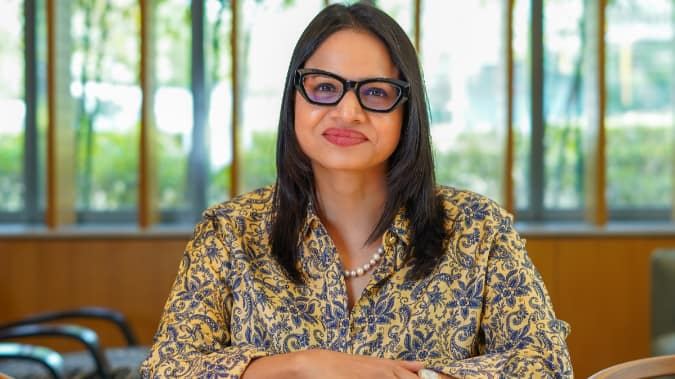
In a conversation with BrandWagon Online, Neena Gupta, CEO, Miiro Hotels, said the idea was to respond to a traveller who is no longer satisfied with a standard stay. “We had the opportunity to actually really seriously look at the independent hotel space,” she said, adding that the goal was to build something “more boutique, something which was our own personality and our own brand.”
A strategic detour that became a brand
Miiro’s beginnings lie in InterGlobe’s larger push to expand beyond India and place long-term bets in global markets. Europe stood out early, given its steady tourism demand and limited room for new entrants.
The initial plan was straightforward. Acquire strong hospitality assets in key cities and build gradually. That changed as the group spent more time in the market.
“We had the opportunity to actually really seriously look at the independent hotel space,” said Neena Gupta, CEO, Miiro Hotels. “That’s where we invested with a clear idea that there was an opportunity to create something of our own, something more boutique, something which was our own personality and our own brand.”
A portfolio acquisition in 2019 brought scale much faster than expected, giving the group access to multiple properties across cities in one move. Within months, however, the pandemic brought global travel to a halt.
Instead of slowing down, the group used that period to rethink its approach. “We actually deployed all our energy in creating something new when the market is back,” Gupta said. The groundwork for Miiro was laid during this phase.
Designing for a different traveller
The brand’s positioning is backed by research across Europe and the US, where Miiro identified a segment it calls “self-assured travellers”. These are frequent visitors to cities who are less interested in ticking off landmarks and more focused on how a place feels.
“They’re not really looking to hit only the tourist spots. They’re coming to the city to live like locals,” Gupta said.
That thinking shows up clearly in the way Miiro approaches its properties. No two hotels are meant to look alike. A building in Paris retains its identity, just as one in Vienna or Barcelona does. The facades are preserved, and the interiors are shaped around the neighbourhood rather than a fixed brand template.
“Our hotels are not cookie cutters,” Gupta said. “Each place you go, they just look different.”
The shift reflects a broader change in traveller expectations. Hotels are no longer just a place to sleep. They are part of how a city is experienced, whether that is through design, food, or simply the way spaces are used.
Hospitality as an emotional experience
Alongside design, service is where Miiro is trying to draw a line between itself and more established formats. The brand blends European aesthetics with a style of hospitality that is warmer and more intuitive.
“We are seeing that most of our guests are really applauding the sort of service that they get,” Gupta said. “It’s warm, it’s more genuine… a cusp between the very traditional hospitality that you see in India and sometimes a very casual hospitality that you can see in the West.”
For Gupta, the business goes beyond operations and into how guests feel during a stay.
“It’s not about what you say or do, it’s about how you make them feel,” she said. “Travel industry is the most emotionally charged industry to please.”
Scaling fast, then pausing to refine
Miiro’s expansion has been quick. Six hotels across five cities have been refurbished and reopened with new concepts in under two years. Each property required renovation, fresh hiring, and a reset in positioning.
That pace has also brought complexity. Construction, licensing, and staffing challenges have played out differently across markets. At the same time, maintaining consistency in service across geographies remains a work in progress.
“Creating that common DNA, I think is the third biggest challenge,” Gupta said. “You can’t be just entering into a new hotel with a different DNA.”
After its most recent opening in Vienna, the brand is stepping back briefly to tighten its processes.
“We’re trying to pause this year, to consolidate, refine our brand, solidify our training, solidify our manuals,” she said.
Guest feedback is already feeding into changes, from room configurations to food and beverage formats.
“It’s a continuous process,” Gupta added. “Like once you build a home, you make it beautiful. It’s a never-ending duty.”
Travel’s new role in a post-pandemic world
The brand’s timing aligns with a wider shift in travel behaviour. The return of travel after the pandemic has been strong, but the reasons for travel have evolved.
“People are going to continue to travel because that’s a human need,” Gupta said. “It’s not luxury anymore. It has become a necessity.”
Work and leisure are increasingly blending, with travellers extending trips and looking for more flexible environments.
“They also want to stay in a much different concept,” she said. “It’s also vacation while you travel.”
The road ahead
For now, Miiro is staying focused on Europe, with additional properties in the pipeline. Expansion will be gradual, tied to locations that fit the brand’s sensibility.
India is not an immediate priority, particularly in city markets where boutique formats are still limited.
The larger goal is to build a brand that feels local wherever it operates, without losing its identity.
“We don’t have to slap India on the map of Europe,” Gupta said. “We have to subtly get the best of India and merge it into the best of what these cities have to offer.”
That balance between familiarity and difference could define how far Miiro goes. In a market used to sameness, even small shifts in approach can stand out.