
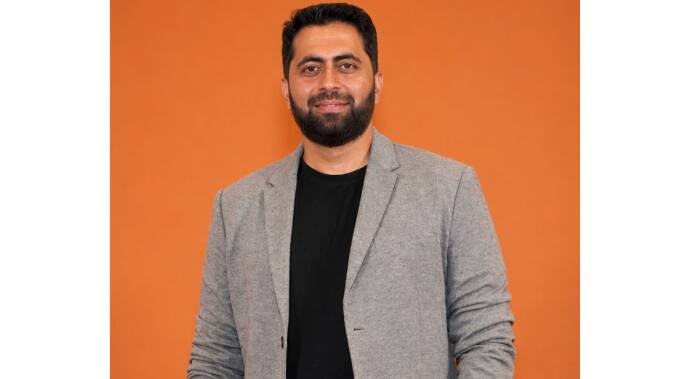
Balaji Telefilms is undergoing a transformation phase by expanding from television to OTT, YouTube, talent management and new-age digital businesses. FE BrandWagon catches up with Nitin Burman, Chief Revenue Officer, Balaji Telefilms, to understand the changing game plan, obsession with scale and the monetisation strategy of its content across platforms. (Edited Excerpts)
Q. You joined Balaji Telefilms around 18 months ago and spearheaded the charge on digital. How has the revenue strategy evolved in this span? What does the road map for 'Balaji 2.0' look like?
It has been an intensive year and a half. While Balaji is a legacy production house with over two decades of experience in TV and movies, we are now transitioning into what we call Balaji 2.0. A major part of this is Balaji Studios, where we collaborate with independent creators to develop shows for various platforms. We have already locked in co-produced content for OTT and are looking at producing over 200 shows this financial year. We have branched out into three new verticals, along with the traditional production. Hoonur is our talent management arm, Balaji Astroguide focuses on the astrology space and Kutingg is our rebranded app that combines horizontal and vertical content formats.
Q. How do you perceive the longevity of short-form scripted content when micro-dramas are a global phenomenon but still an emerging genre in India?
The industry in India is growing at a phenomenal pace. Last financial year, the market size touched nearly 300 crores and we are seeing a CAGR of 25%. Micro-drama is currently in the same phase that OTT was in six or seven years ago. I expect to see explosive growth in the next two to three years. It will not necessarily replace other forms of entertainment; rather, all these formats will coexist. For us, the key is scale. While small creators might do a few shows a month, we are producing close to 20 shows per month to make the model truly sustainable.
Q. With major OTT platforms shifting toward hybrid models and being more selective with budgets, how are you protecting your margins?
The market is definitely recalibrating. Even global giants like Netflix and Amazon Prime have moved to hybrid models where ad-free content is a premium tier, while others watch ads. We follow a similar strategy with our app. To deal with tighter commissioning budgets, we focus on economies of scale. We are not restricted to high-budget productions as we produce everything from micro-dramas to premium shows for Netflix. By maintaining a diverse range, we keep our production margins intact across the board.
Q. You have taken a very firm stance on pre-selling content to OTT platforms before theatrical releases. Does this risk-averse approach curb your creative freedom?
Not at all. It is a calculated business approach. We pitch our scripts and creative concepts to platforms early on because we need to run the business carefully and with minimal risk. We do not wait for a movie to be fully released before finding a buyer. A lot of the industry operates on content that isn't pre-tested, so we sell based on the strength of the script. This ensures financial stability without compromising the creative vision Ekta Kapoor brings to each project.
Q. CTV is expected to be a huge draw for advertisers in 2026. How is Balaji re-packaging its content to appeal to digital-first brands for the big screen?
We recognise that YouTube is the most consumed app on Connected TVs because it is free. To tap into this, we launched YouTube Originals funded by advertisers. Unlike the never-ending daily soaps of the past, these shows are limited to 30 or 60 episodes. We have an in-house sales team that integrates brands directly into these stories. It allows us to capture the family audience that is increasingly moving toward CTV and digital formats.
Q. You mentioned YouTube has become a standalone profit sector for you. How does it fit into your wider ecosystem and how do you manage customer acquisition costs?
YouTube is no longer just a funnel for our paid apps rather it is a profitable vertical in its own right. We have grown our main channel to nearly 1.7 million subscribers and launched new niche channels like Sunofy India for podcasts and What The Fame for Gen Z. Our strategy to manage costs is simple: we first put content behind a paywall on the Kutingg app for our paid users. After a certain period, we move it to YouTube for free users. By integrating brands into this content, we subsidise the production costs and rely more on organic growth through our actors' social media followings rather than expensive paid marketing.
Q. Talent management via "Hoonur" is a new direction for the group. How are you monetising fandom and closing the gap in the influencer market?
We realised there was a gap in the market. Agencies manage movie stars or digital influencers, but no one was specifically managing TV stars with a massive social media reach. We now have over 30 artists on our roster. We earn by getting them to work on our shows and external projects, including events and music videos. While our talent still has to audition and fit the creative requirements of a role, we do give priority to our own roster. It makes the vertical self-sustaining and helps us monetise the massive fan followings these stars command.
Q. In the next 24 months, what do you consider the greatest revenue generation opportunity for Balaji Telefilms?
So, our first focus would entirely be on the digital vertical as a whole. To be specific, Hoonur, the Balaji Astroguide app and the YouTube Originals are the ones that are going to play the role of game changers for our net revenue. We are embracing technology. We have an in-house AI team and have recently received an award at the Jaipur International Film Festival for a film called 'Paani', where AI has been used extensively. We are focused on modernising the art of storytelling while retaining movies and high-quality production as the center stage.