For most of its short history, India's electric vehicle conversation has been a technical one: range anxiety, charging infrastructure, government subsidies. Brands competed on specifications and price points, and marketing followed the product. That playbook is changing, and BGauss, the EV arm of Mumbai-based RR Global, is among the brands most visibly trying to write a new one.
This year, BGauss announced a partnership with Rajasthan Royals, its second major sports association after Pro Kabaddi League. The centrepiece of the tie-up is the “BG-PinkE” a one-of-a-kind branded scooter concept created as the symbolic mascot of the collaboration: bold, youthful, and unmistakably fandom-forward. It is a deliberate departure from convention: not a logo on a jersey, but a product expression rooted in the idea that what you ride can signal who you are.
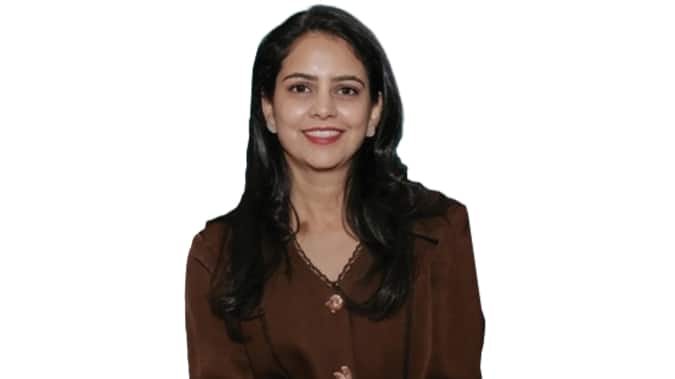
Priyanka Kabra, Founder Director – Brand & Marketing at BGauss, spoke to BrandWagon Online about the thinking behind the Rajasthan Royals partnership, the evolving EV consumer in India, and why she believes cultural resonance, not just engineering, will decide the next phase of the category. (Edited Excerpts)
Q. The EV conversation in India began with technology, infrastructure, and policy. Today, it is increasingly becoming a cultural and lifestyle choice. How do you see this shift shaping the category, and where does the Indian EV consumer stand today?
Over the last few years, the EV conversation in India was understandably centred around establishing viability, ensuring the technology was dependable, the infrastructure could support scale, and consumers were prepared to embrace the shift. Those were necessary conversations for a category still establishing its foundations.
But that chapter is largely behind us. What's happening now is more interesting and more demanding for brands. The early-adopter wave, which was largely tech-curious and policy-aware, is giving way to a far broader, more diverse consumer who is entering the category on their own terms. EVs are increasingly part of everyday urban life rather than a technology you're evaluating for the future. That's where cultural relevance begins to matter and where the real brand-building work begins.
India remains a highly practical market, and that won't change. But the consumer today sits at an interesting intersection: rational in decision-making, but increasingly emotional in brand association. The brands that will stand out in the next phase of the EV journey are those that can combine practicality with aspiration in a way that feels authentic to consumers.”
Q. EV adoption in India has traditionally been driven by practical factors like fuel savings and affordability. As brands increasingly position EVs aspirationally, can aspiration and practicality coexist without alienating the core value-conscious buyer?
“I don’t think rational and aspirational choices are separate anymore, especially in the Indian market. Consumers today look for practical value, but they also want to feel connected to the brands they choose. Someone buying a scooter is obviously thinking about savings, reliability, and everyday convenience, but they are also thinking about design, lifestyle, and whether the brand reflects who they are.”
The initial trigger for EV adoption may be rational reflected by lower running costs, ease of commuting, smart financial planning. But long-term brand preference is rarely built on rationality alone. Consumers enter a category for practical reasons; they stay loyal to brands that build emotional relevance.
What’s also worth noting is that consumer ambition itself is evolving in India. For younger consumers especially, aspiration is no longer only about premium or status signalling. It increasingly reflects smart choices, a modern lifestyle, and a certain confidence in how you move through the world. The rational case gets you on the consideration list. The emotional and lifestyle connect is what gets you chosen.
Also Read: BrandWagon Chai pe Charcha with Da Milano and Rosso Brunello’s Sahil Malik
THE RAJASTHAN ROYALS PARTNERSHIP
Q. BGauss has associated with both the Pro Kabaddi League and the Indian Premier League — two very different sporting properties. What role does sports play in building a long-term EV brand, and what made Rajasthan Royals the right fit at this stage of the journey?
Sport in India is one of the few spaces where passion, community, and identity converge at scale and for a young EV brand, those are exactly the emotional territories we need to build in. Beyond the rational barriers to EV adoption, there is an emotional unfamiliarity that brands need to actively bridge. People haven't grown up around EVs the way they grew up around ICE two-wheelers.
Sports partnerships help us close that gap by placing BGauss inside experiences that people already have a deep, personal relationship with.
Pro Kabaddi and IPL serve that purpose in very different but complementary ways. Kabaddi gave us access to more grassroots, regional cultural energy, deeply connected to the everyday commuters we are building for. IPL operates at a different intersection entirely: youth culture, entertainment, and digital engagement at a national scale.
Rajasthan Royals felt like a natural fit because of who they are as a team - progressive, driven, built on discovering talent and doing things differently. That spirit aligns with how we see BGauss: a brand that is making considered, forward-looking choices, not just following the category playbook. At this stage, we wanted a partner that shared that sensibility. Relevance mattered as much as reach.
Q. Sports sponsorships in India have traditionally focused on visibility and logo placements. With the limited-edition Pink Scooter, BGauss seems to be taking a more lifestyle- and fandom-led approach. What insight drove this idea, and how did the collaboration come together?
The insight came from recognising that fandom today is no longer passive. Consumers increasingly want to participate, personalise, and express the communities and identities they associate with.
Globally, we’re seeing the rise of what is often referred to as “fandom commerce,” where sports and culture extend far beyond merchandise into lifestyle-led products and experiences. We saw an opportunity to explore how that idea could translate meaningfully into mobility as well.
The Pink Scooter was conceived as a way to move beyond conventional sponsorship branding and create something that felt more emotionally resonant and culturally visible. Rather than simply placing team branding onto a vehicle, we wanted to create a product expression that captured the spirit and identity associated with Rajasthan Royals through its design language - bold, confident, youthful and instantly distinctive.
Also Read: At its first Delhi address, TATA Starbucks signals a shift from scale to depth
BUILDING THE BGAUSS BRAND
Q. BGauss comes from the strong industrial legacy of the RR Global, yet the brand is building a distinct, youth-forward identity. How intentional is that positioning, and how do you balance leveraging group heritage while allowing BGauss to establish its own voice?
It's an entirely conscious choice, and it comes down to understanding what each layer of credibility does for different consumers at different moments.
RR Global's four decades in India's electrical and infrastructure ecosystem is a foundational asset. It tells a channel partner, a fleet operator, or a first-time EV buyer in a smaller city that BGauss isn't a start-up betting on a trend; it's backed by a group that has been part of how India is built. That reassurance matters deeply in a category where consumers still ask, "will this brand be here in five years?".
But that same heritage isn't necessarily what a 26-year-old urban consumer is looking for when they're forming a relationship with a brand. We see the two as complementary rather than competing. The group legacy gives us depth and earned trust. BGauss, as a brand, has the freedom and the responsibility to express that through a more modern, youthful identity.
Q. Automotive marketing has traditionally focused on performance, mileage, and specifications. In a category still dominated by engineering-led conversations, how do you balance cultural storytelling with the core business objective of driving purchase consideration?
I genuinely don't see them as opposing forces. Product credibility remains non-negotiable in mobility. Consumers need confidence in performance, durability, and long-term reliability before they'll commit to a purchase. But purely functional communication rarely creates lasting differentiation, especially as a category matures and products become more comparable.
Cultural storytelling does something different: it builds familiarity and warmth before a consumer is actively in a purchase cycle. So, when they do start evaluating, BGauss isn't a brand they're encountering cold. They already feel something about it, and that changes the quality of the consideration entirely. Culture brings consumers into the room. Product gives them a reason to stay.
Also Read: Why consistency, not reinvention, defines The Body Shop at 50
Q. Looking ahead, do you believe the next phase of EV brand-building in India will be won through product differentiation or through deeper cultural and emotional resonance with consumers?
Honestly, it won't be an either-or. Technology and interface are no longer differentiators, rather the new price of entry. Every serious EV today offers a smart display, a connected app, OTA updates. The screen is the handshake. It has to feel intuitive, premium, alive; it’s the first proof that the brand understands the rider.
But technology opens the door; emotion is what makes someone stay. The real relationship is built in everything around the interface, how the scooter looks parked outside a café, how it makes a 24-year-old feel on her first solo commute, how it fits into the India she's building for herself. Product differentiation gets you considered. Cultural and emotional resonance gets you chosen and recommended. That's the BGauss we're building: engineered for the head, designed for the heart.