
Some categories grow by staying invisible. Stainless steel has been one of them. It runs through industries, homes and infrastructure with quiet efficiency, doing exactly what it is supposed to do without demanding attention.
That has also meant it rarely becomes a conscious choice.
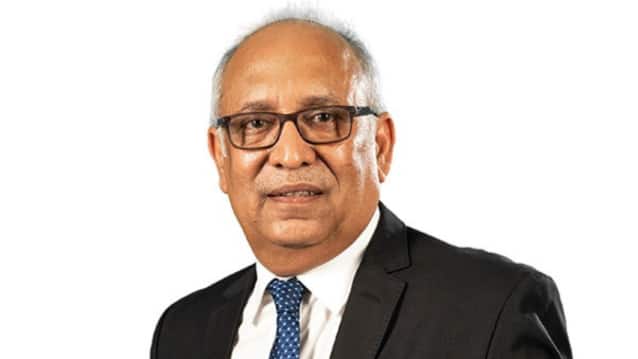
For Jindal Stainless, the challenge is not about proving relevance. It is about making that relevance visible. In a conversation with FE Brandwagon Online, Vijay Sharma, Director – Corporate Affairs and Marketing, Jindal Stainless, describes the category as one that has always been close to the consumer, but never quite in focus.
“The challenge is not relevance, but the lack of awareness and reliable cues at the point of purchase,” he says.
Building a brand where function has always led
Creating a consumer facing identity in a functional category comes with its own set of constraints. Stainless steel is defined by performance. Corrosion resistance, durability, long lifecycle, recyclability and strength are its real differentiators. Yet, these are not attributes that naturally translate into everyday conversation.
Sharma believes distinctiveness here has to come from something more consistent and more human. “In order to build a distinctive identity, a brand has to be authentic, honest and relatable,” he says.
That thinking shapes how Jindal Stainless is approaching the category. Instead of leading with technical superiority, the brand is leaning into storytelling that connects the material to lived experiences. Music, culture and mass platforms become tools to bring the category out of its industrial shell.
At the core of this effort sits a simple idea. Trust, not as a claim, but as something that can be understood and recognised.
Also Read: How Schneider Electric India is aligning innovation with consumer behaviour
The long arc of a B2B legacy
The move towards the consumer is not a break from the past. It builds on a foundation that has been shaped over decades.
Jindal Stainless has worked closely with fabricators, suppliers and partners, creating a value chain that operates on reliability and consistency. That ecosystem remains central to the business.
What has changed is the recognition that the last mile has been under served.
“This is not a shift away from B2B, but a strategic extension of it,” Sharma says. “Stainless steel touches consumers every day but the end customer had very little visibility or assurance.”
The effort now is to connect these two ends. The industrial backbone and the everyday decision.
Trust, made tangible
The Jindal Saathi Seal emerges from this gap. It is positioned as a marker that simplifies a complex problem.
Consumers often have no reliable way to verify whether what they are buying is genuine stainless steel. In categories like pipes and tubes, where counterfeiting is more visible, that lack of clarity becomes a real concern.
“In the absence of any reliable validation mechanism, purchase decisions are frequently made without certainty,” Sharma explains.
The seal attempts to change that moment of hesitation. It is a visible cue that signals authenticity, backed not just by Jindal Stainless but also by authorised downstream partners. The co branded nature of the seal reflects a broader understanding. Trust in this category is built across the ecosystem, not by a single player.
Also Read: Acer Enters Luggage, but the Real Battle Is Consumer Perception
Making a technical category easier to live with
One of the more difficult parts of this transition is communication. Stainless steel is not an easy story to tell without slipping into jargon.
Jindal Stainless has chosen to keep the narrative grounded. Instead of explaining the material in detail, the brand shows where it exists. Homes, commercial spaces, infrastructure. Places people recognise without needing explanation.
“We have adopted storytelling formats that bring relatability, using music, culture and mass platforms,” Sharma says.
The campaign film, featuring Ranveer Singh, is one expression of this approach. It uses scale and energy to draw attention, but the message it leaves behind is straightforward. Look for the seal. The campaign starts the conversation, but it is not meant to carry the entire weight of the idea.
Credibility that already exists
There is also an underlying confidence in how the brand is approaching this shift. Stainless steel does not need to build credibility from scratch. It already exists, built over years of use in critical sectors.
From high speed rail projects to defence systems and space missions, the material has been part of some of the country’s most demanding environments.
“We are leveraging celeb presence to carry the truth of the category,” Sharma says, referring to the role of Ranveer Singh in the campaign.
The communication, therefore, is less about creating a new narrative and more about bringing an existing one closer to the consumer.
Also Read: At its first Delhi address, TATA Starbucks signals a shift from scale to depth
The role of the ecosystem
For the Saathi Seal to have meaning, it has to work across the network that brings the product to market.
Dealers and fabricators remain influential in shaping purchase decisions. The seal is designed to align their interests with that of the brand and the consumer. Partners gain visibility and recognition. Consumers gain a clearer signal.
“Alignment comes from making it work for everyone,” Sharma says.
As awareness grows, consumer demand can reinforce this alignment. When people begin to ask for the seal, it creates an incentive for wider adoption.
Changing behaviour, slowly
The real shift Jindal Stainless is aiming for is behavioural. Moving stainless steel from something that is assumed to something that is actively chosen.
That change will not come from a single campaign. It will come from repetition, visibility and consistency across the ecosystem.
Success, Sharma suggests, will be measured across multiple layers. Recall, adoption and, most importantly, whether consumers begin to recognise the seal and look for it when they buy.
It is a gradual process. But it starts with a simple shift in perspective. Asking people to notice what they have always used, and to choose it with a little more certainty.