
For decades, Bata has been part of India’s everyday vocabulary. It has outfitted schoolchildren, office-goers, wedding guests and retirees across generations. Few brands enjoy that level of familiarity. Fewer still manage to remain visible in a market increasingly shaped by fast fashion cycles, sneaker drops and social media-driven discovery.
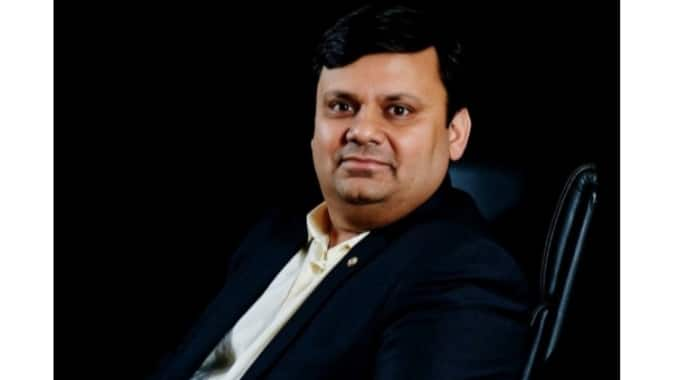
Badri Beriwal, Chief Strategy and Business Development Officer at Bata India Limited, says navigating this balance now defines the brand’s direction.
In a conversation with FE Brandwagon he says, “Legacy gives you trust, and trust is a very powerful currency. But it also raises expectations. Consumers assume you will get things right. The real challenge is not whether you have history, but whether you can keep showing up as contemporary, meaningful and relevant decade after decade.”
That belief has guided Bata India’s recalibration over the past few years, as the company has quietly reworked how it designs products, runs stores, communicates with consumers and scales for the future.
Reinventing Without Erasing the Past
Bata’s transformation has not been about abandoning its roots. Instead, it has been about updating the mechanics behind what the brand already stands for.
At the heart of this shift is a global-local product strategy. Bata’s design centre in Italy tracks international footwear trends, while Indian teams adapt those cues to local preferences, climate realities and price sensitivities. The goal is not to imitate global fashion, but to interpret it for Indian lives.
“Indian consumers want global design, but it has to work in their context. The job is to merge global trends with local needs and deliver products that feel current without feeling out of place,” says Beriwal.
Also Read: Why Personalised Customer Interactions Are Central to Tata Communications’ Growth Strategy
Alongside product reinvention, Bata has put equal emphasis on how consumers experience the brand in-store. As shopping journeys become more fragmented and social sharing more instinctive, retail has emerged as both a conversion point and a communication channel.
He further exerts, “One great experience doesn’t just bring a consumer back. It brings their friends, their family and their entire network. And one poor experience travels even faster.”
This thinking has led to a comprehensive rethink of retail execution. Bata now evaluates stores through what it calls zero-based merchandising, rebuilding the consumer journey from scratch rather than layering improvements on legacy systems. Everything from inventory depth and staff training to visual presentation and trial-to-purchase timelines has been redesigned to reduce friction and improve consistency.
The scale of this effort mirrors Bata’s footprint. With nearly 2,000 stores across India and a steady expansion into Tier III, IV and V towns, the company’s physical presence remains a core competitive advantage.
Sneakers, Hybrids and the Comfort Shift
Changing consumer behaviour has also reshaped Bata’s product priorities. Beriwal points to three trends that have fundamentally altered India’s footwear market.
The first is the sustained growth of sneakers, particularly among younger consumers. The second is hybridisation, where footwear must look formal but deliver sneaker-level comfort. The third is the comfort imperative, which has moved from being a differentiator to a basic expectation.
“Comfort is no longer a feature you advertise. It is the starting point. If the product is not comfortable, the conversation ends there,” emphasises Beriwal.
Bata’s response has been deliberately targeted. Its Power brand has gained traction through functional innovation, including hands-free easy-slide sneakers that appeal to convenience-driven consumers. Office sneakers reflect changing workwear norms, while Floats has emerged as a comfort-first category with strong cross-occasion relevance.
Understanding Consumers Beyond Demographics
Behind these visible changes sits a data-led understanding of the consumer. Bata’s segmentation approach has moved beyond age and income to behaviour-driven insights. The company now tracks 22 consumer cohorts based on purchase frequency, category preference, usage patterns and engagement depth. This has reshaped long-held assumptions about who shops at Bata.
“The science of segmentation today is completely database-driven. We understand what consumers buy, how often they buy, and how deeply they engage with the brand. That understanding changes how you design products, communicate and plan growth,” explains Beriwal.
One insight stands out. The average age of a Bata consumer in India today is 32, placing the brand squarely in the middle of the country’s most economically active segment. In Beriwal’s words, “That is exactly where India’s spending power sits today.”
While Bata continues to serve consumers across age groups, its marketing lens is firmly focused on recruiting new consumers into the brand ecosystem.
Also Read: Why Gen Z Still Wants a Titan on Their Wrist
From Mass Advertising to Community Conversations
Perhaps the most visible shift in Bata’s evolution has been in marketing. Over the past two to three years, the company has moved away from mass, one-way communication towards digital-first, community-led engagement.
Today, more than 65 percent of Bata’s marketing spends are digital, with a strong emphasis on social platforms, creators and authentic storytelling.
“The conversation has shifted from how much media you buy to how authentic your stories are. Creators, communities and real consumer voices matter far more than polished advertising today,” states Beriwal.
This shift has also changed how Bata views the relationship between brand building and performance marketing. He further adds, “There was a time when people believed performance marketing diluted brand equity. That thinking is outdated. If your product, pricing and communication are aligned with your brand core, performance marketing actually strengthens the brand.”
Omnichannel as Operating Reality
With one of India’s largest physical retail networks, Bata approaches omnichannel not as a future ambition but as an operating norm. Consumers move fluidly between online discovery and offline trial, often completing their purchase in a different channel from where the journey began.
Bata’s stores now function as fulfillment and service hubs, enabling in-store ordering for online delivery and faster turnaround times. This integration allows the company to leverage its physical footprint as a logistical advantage rather than a cost centre.
While physical retail still accounts for the majority of sales, digital channels are growing rapidly. Bata has also begun expanding into quick commerce, already present on multiple platforms and exploring deeper partnerships within the lifestyle commerce ecosystem.
Also read: From Dice to Devices: Inside Monopoly’s 90-Year Reinvention Playbook with Hasbro's Nilay Verma
Thinking Beyond the Next Quarter
Looking ahead, Bata sees opportunity in both market structure and internal capability. India’s footwear market remains largely unorganised, and regulatory and income-led shifts are expected to accelerate movement towards organised players.
Internally, Bata’s focus areas include product rejuvenation through Project Renaissance, faster store expansion, deeper large-format partnerships and a stronger omnichannel backbone.
“Every one of our core products is being reimagined with more design, more comfort and more care.”
When asked where he sees Bata a decade from now, Beriwal is confident but measured, he adds “I see Bata having tripled its turnover and significantly increased its market share.”
In a marketplace driven by speed and novelty, Bata’s approach remains rooted in continuity rather than disruption for its own sake.
“Relevance is not about forgetting where you come from. It is about never stopping where you are,” concludes Badri Beriwal.