
With Indian enterprises returning to office in a post-pandemic world, Sodexo India is reimagining the role of workplaces, while constantly seeing itself doubling down on integrated, experience-led services to fuel its growth roadmap. The company’s revenue has been growing every two to three years and is now targeting to achieve a €1billion milestone in India, driven by strong demand across various sectors, including corporates, global capability centres (GCCs), manufacturing, healthcare, and education.
Over the years, Sodexo India, has majorly operated as a behind the scene partner, from managing food services to facilities that keep enterprises running smoothly. Now, as organisations shift their focus from infrastructure to employee experience, Sodexo India, is stepping into a more strategic role.
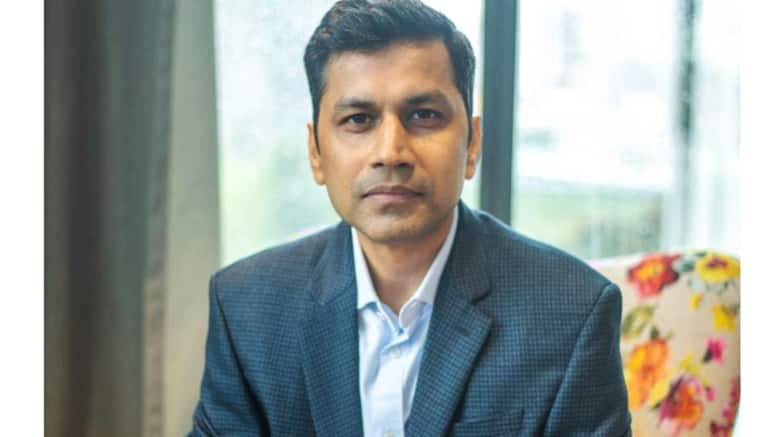
In this conversation with BrandWagon, Rakesh Agarwal, Chief Operating Officer – Business Food, Sodexo India, shares insights on the next phase of growth for the company which will be shaped by focusing on delivering workplace solutions at large, supported by technology enhancement and local expansion. (Edited Excerpts)
Q. Sodexo has set an ambitious goal to become a €1-billion business in India. What are the key growth drivers you see across various sectors that will help build this roadmap?
Today India is witnessing strong growth when it comes to change in the work environment, driven by integrated offerings across diverse sectors including food services and facilities management. Demand is quite robust in large corporations and GCCs, manufacturing and healthcare industries.This has enabled the company to see double revenues every two to three years, supported by structural initiatives such as Make in India, the expansion of GCCs, along with entry of international universities to medical tourism.
To sustain this trajectory, Sodexo is strengthening its investing footprint by opening new offices, offsite kitchens and specialised culinary teams, while deepening capabilities across EHS, sustainability and innovation. Technology has enhanced the growth while delivering deeper consumer and client insights.
Q. Moving forward, as we see more organisations focusing on workplace environment and employee well-being, how is Sodexo repositioning its integrated services to capture this shift?
One of the major challenges that organisations face are GCCs and IT companies, where employees have returned to the workplace. While hybrid work offers flexibility, there is concern around regular going employees over smooth coordination, food culture, and reliable experience. This is where Sodexo comes into the central role. Our key goal is to deliver holistic workplace experiences—from concierge and cafeteria services to help desks, visitor management, and wellness programs. Now, success is not measured just in service delivery, rather in improved workplace attendance, employee experience scores, and measurable outcomes across water and food waste reduction.
Q. India’s corporate catering market is largely unorganised. What is the biggest challenge you see in formalising this sector?
Yes, we strongly believe that India’s corporate catering market remains largely unorganised, and this presents us a significant opportunity to raise our standards and address this notably covering food safety, nutrition, sustainability, and corporate catering experience. Large organisations like MNC’s and GCC’s are now more focused on employee well-being, compliance, and brand reputation. They are often seeking well established partners who can deliver at scale with strong governance, fast technology and transparent processes.
The challenge lies in driving this transition while managing cost expenditure and behavioural changes in a highly fragmented ecosystem. However, this has led us to the formalisation of the sector by combining compliance frameworks, centralised kitchen infrastructure, skilled culinary talent and sustainable corporate catering solutions.
Q. How do you measure CX impact beyond cost metrics, and how does it influence client retention for long-term growth?
At Sodexo India, we measure consumer experience beyond traditional cost metrics. The key focus is majorly from tracking real-time feedback via digital experience scores, repeat usage, participation rates and workplace attendance to adoption of our food services. These insights are often complemented by sustainable indicators like reduced food wastage. Strong consumer experience provides us the foundation for a higher engagement, improved return-to-office outcomes and stronger advocacy, ultimately leading into greater client retention and sustainable long term growth.
Q. As Sodexo scales its integrated food and workplace services in India, which GCCs and large corporate campuses are emerging as key opportunity hubs?
Today, enterprises compete on experience, with employees focusing on return-to-office mandates, we are working closely with clients to offer food and workplace experience solutions that span the entire employee journey. Sodexo addresses this through strengthening its experience beginning well before employees arrive at the office—from covering carpooling to meeting-room bookings, tech-enabled meal purchases, vibrant cafeteria experiences along with diverse healthy snacking options.
With several clients, our partnerships have evolved further to look into the design and space of collaborative workplaces to incorporate larger catering services. Additionally, as most organizations lack in house space for kitchen and cafeteria, we are increasing our investment in offsite kitchens across key geographies to meet their food and catering needs efficiently. We have one facility each in Bangalore & Hyderabad, and will soon launch in Delhi too. As a result, this portfolio has grown 4.5 times over the past three years.
Q. How are master kitchens and offsite food models helping Sodexo scale faster and unlock new revenue streams?
Offsite kitchen infrastructure (Sodexo MasterKitchen) has become an essential as many corporate and industrial workplaces in North India, particularly Delhi, lack adequate on-site kitchen space for food production. With the help of centralized offsite kitchens, it has enhanced consistency, food safety, and cost efficiency, while supporting diverse menus keeping sustainability goals in mind. Strategically located across key industrial and commercial clusters such as Noida, Gurgaon, and Faridabad, these kitchens allow faster delivery and reliable services. For us, investing in off-site kitchens has given profitable outcomes ensuring high-quality industrial catering while meeting growing demand driven by expanding business hubs in the region.
Q. Looking ahead, what advice would you give to young professionals aspiring for leadership roles in the services industry?
My advice for young professionals aspiring leadership roles in the services industry is to broaden their perspective on what a career in hospitality can be. Hospitality extends well beyond hotels and restaurants—it is more about delivering experiences at scale, managing complex operations across diverse work environments, and consistently turning everyday challenges into opportunities.