
Land in India has always been emotional. It is inheritance, security, legacy and, often, the most important asset a family owns. But it has rarely been a category consumers trusted easily.
For decades, buying land meant stepping into a maze of title checks, broker dependency, fragmented paperwork and legal ambiguity. Apartments could be compared, toured and financed. Land was different. It was often seen as opaque, speculative and difficult to navigate.
The House of Abhinandan Lodha (HoABL) believes that is precisely the opportunity.
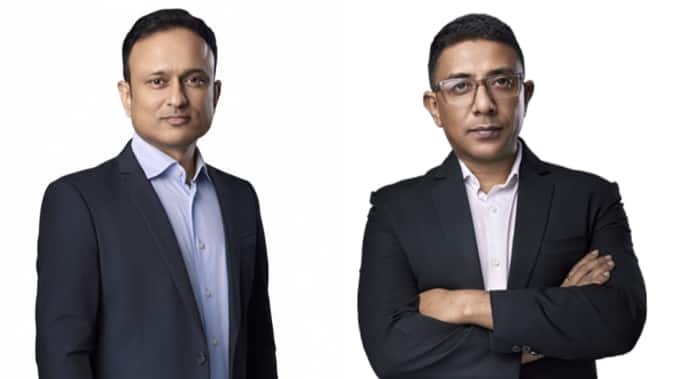
In a conversation with FE Brandwagon Online, Samujjwal Ghosh, CEO, HoABL, says the company was built around a simple but disruptive idea: branded land.
“We observed a clear structural shift in how Indians were approaching land ownership,” says Ghosh. “While land has always held deep financial and emotional significance, the ownership experience had not evolved to match the expectations of a modern, digitally enabled investor.”
That insight became the foundation of HoABL’s proposition- not just selling plots, but building a branded, structured and institutionally delivered land ownership experience.
Also Read: Between Place and Personality: How Miiro is Shaping a New Kind of Stay in Europe
Selling trust, not just land
Unlike apartments or villas, land does not offer immediate gratification. There are no finished interiors to inspect, no sample flats, no visible proof of lifestyle. What is sold is possibility.
That changes the role of marketing entirely.
“With apartments or villas, buyers can experience the end-product; walls, finishes, amenities, and mostly have immediate usability,” says Saurabh Jain, CMO, HoABL. “With land developments, while these things exist in the overall development, personal utility is still likely to be over a slightly longer term. Therefore, mostly one is marketing potential of the land.”
Which means the real product is trust.
Jain says land marketing is less about visual persuasion and more about reducing anxiety around the purchase itself.
“The value of land lies in location fundamentals, title clarity, infrastructure readiness, and long-term appreciation. As a result, marketing shifts away from visual persuasion toward credibility-building. In a category that has historically been perceived as unstructured, trust becomes the core proposition.”
That is why HoABL’s campaigns are designed less like real estate promotions and more like category education.
Its campaign “Zameen Se Bante Ho Aap” leaned into the emotional identity of ownership, while the newer “No Drama” campaign tackles the rational hesitation buyers associate with land purchases- complexity, paperwork and uncertainty.
Also Read: Balaji Telefilms 2.0: Scaling Micro-Dramas, YouTube and Talent Management
From speculative asset to structured product
The company’s larger bet is that Indian consumers are changing how they think about land.
Traditionally viewed as either speculative investment or inherited wealth, plotted developments are now increasingly being seen as deliberate long-term assets, especially among younger buyers.
For many, the purchase is driven by wealth preservation, future residential intent or generational continuity rather than short-term appreciation.
This shift is also being accelerated by infrastructure-led transformation in cities like Ayodhya, Vrindavan and Varanasi, where public investment and connectivity are reshaping real estate potential.
“The intent to own land was strong, but buyers increasingly sought clarity, planning discipline, and institutional reliability,” says Ghosh.
HoABL’s model attempts to bridge that gap.
Instead of selling fragmented parcels through what Ghosh calls the traditional “barfi-cut approach,” the company positions plotted land as a structured product backed by legal diligence, master planning and infrastructure readiness.
“Nearly 40% of our land parcels are consciously reserved for common spaces and amenities, fostering community living and enhancing long-term value,” he says.
The idea is simple: if land is delivered with visibility, governance and usability, it stops feeling like a risky transaction and starts behaving like an organised asset class.
Why digital ownership is central to the pitch
One of HoABL’s strongest differentiators is its fully digitised ownership journey.
Land transactions in India are historically paperwork-heavy and dependent on intermediaries. HoABL has built a 100% digital process covering discovery, documentation, payments and registration.
Buyers can access verified legal records, approvals and transaction updates through a structured interface, reducing friction and improving transparency.
“Today, over 6,500 customers have completed land purchases through this platform, many of them evaluating and transacting remotely with complete visibility and confidence,” says Ghosh.
The company claims it has sold nearly 13 million sq. ft. of developed land without meeting a single customer face-to-face, while around 34 million sq. ft. remains under active development.
That statistic matters because it signals something larger than operational efficiency- it suggests trust can now be built digitally even in one of India’s most traditionally offline categories.
Also Read: Can Premium Fragrance Go Mainstream? Bla Bli Blu Thinks So
When spectacle works only if credibility exists
For a high-involvement category like land, visibility alone does not convert.
That is where HoABL’s larger brand moments come in.
Its floral mosaic Guinness World Record in Vrindavan was one such exercise- part symbolic gesture, part cultural statement, part brand-building.
Jain says the return on such initiatives cannot be measured only through immediate sales.
“In a high-involvement category like land, we believe that ROI cannot be evaluated purely on immediate conversions,” he says. “It needs to be assessed across awareness, trust acceleration and reinforcing our presence as a world-class brand.”
The Vrindavan initiative, he says, was designed to respect local sentiment while strengthening the company’s identity as a modern, organised developer.
But he is clear that spectacle alone is never enough.
“What this reaffirmed for us is that visibility creates impact only when it is backed by substance. Spectacle by itself does not convert. Credibility combined with spectacle does.”
That same thinking drives newer experiments such as HoABL’s mixed-reality campaigns and even its unexpected Zepto collaboration, aimed at proving that land can be marketed in contemporary, digital-first formats.
Building India’s branded land category
As HoABL expands into emerging corridors beyond traditional metros, the larger ambition is not just growth in plotted developments, but ownership of an entirely new category.
Its projects now span locations such as Alibaug, Ayodhya, Vrindavan, Goa, Nagpur and Dapoli, with expansion planned across multiple high-growth destinations.
The company wants branded land to become a recognisable consumer proposition, not just a developer promise.
For that to happen, education remains as important as expansion.
“At a broader level, the opportunity lies in enabling more Indians to participate in land ownership with clarity, confidence, and a long-term perspective,” says Jain.
That may ultimately be HoABL’s biggest challenge- and its biggest opportunity.
Because in India, people have always believed in land.
The harder task is getting them to believe in how it is sold.