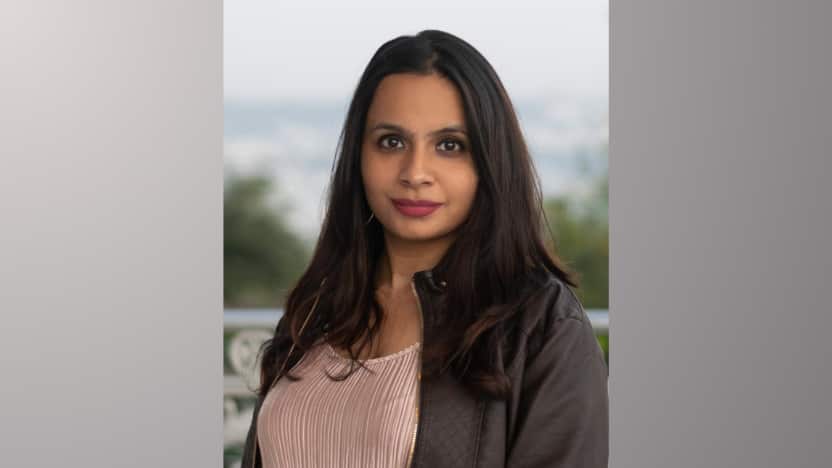
In this conversation with BrandWagon Online, Shwetha Iyer, SVP and Head of Marketing at Kissht, discusses how the digital lender is reshaping its brand narrative amid rising scepticism around credit. She shares insights on moving beyond performance-led acquisition, building trust through clarity and behaviour, leveraging data and regional cues, and using Sachin Tendulkar’s credibility as Kissht sharpens its focus on larger-ticket products like digital Loans Against Property and long-term customer value. (Edited Excerpts)
1. Kissht operates in a category where trust is everything. How are you repositioning the brand narrative to stand out in a cluttered fintech market where consumer scepticism around credit products is rising?
Trust in credit is earned through behavior, not branding, and that guides our entire repositioning. We are consciously building a narrative anchored in clarity, transparency and long-term dependability. For us, this means simplifying every part of the journey, from onboarding to repayments, so that customers feel fully informed and supported at each step. As our product suite expands into larger-ticket categories like digital Loans Against Property (LAP), credibility becomes even more crucial. LAP is a category where fairness, documentation transparency and valuation integrity matter immensely, and we are designing the experience to reflect that seriousness. Our association with Sachin Tendulkar reinforces this direction. Sachin embodies values that India instinctively trusts such as discipline, consistency and integrity, and that emotional reassurance plays a powerful role when consumers choose a credit partner. The brand is evolving to communicate that Kissht is not just a lender but a long-term financial ally, equally committed to responsible underwriting and human empathy.
2. With performance marketing getting more expensive, what is Kissht’s customer acquisition strategy now? Are you shifting towards brand-building, partnerships or deeper retailer integrations?
We are shifting towards a smarter, more balanced acquisition model that reduces over dependence on pure performance channels. Brand-building is now a significant lever because in credit, familiarity directly influences conversion and CAC. Sachin Tendulkar’s presence is already strengthening trust and visibility in markets where credibility is the key barrier. Alongside this, we are expanding our high intent digital and offline partnerships, including merchant ecosystems, payments infrastructure and distribution channels tailored for LAP, which help us capture demand where it naturally occurs. A major part of our strategy is also profitability-led acquisition. We are now designing campaigns and partnerships that bring in customers with strong repayment behavior and long-term value, which is especially important as we scale structured products like LAP. Ultimately, the acquisition strategy of the future will be brand led, ecosystem driven and data informed, and we are building exactly that.
3. What does your consumer data tell you about how Indians actually shop on credit today?
Consumer behavior around credit has evolved significantly. Indians today view credit less as a distress tool and more as a planned instrument to manage life events and cash flows. Our data shows that users, especially younger segments, prefer clarity, predictable fees and flexible repayment structures over pure speed. They also evaluate lenders based on long-term trustworthiness and service quality, not just approval friction. Another meaningful trend is the rising comfort with higher-ticket credit, including LAP, for needs like home improvement, education, business expansion and medical expenses. We also see a growing segment that uses credit consciously to build repayment discipline and improve future eligibility. This behavioral maturity is shaping how we design products, journeys and communication.
4. Any behavioural shifts in ticket sizes, categories or frequency that are influencing your marketing decisions?
Yes, several clear shifts are influencing our approach for FY26 and beyond. Ticket sizes are steadily rising across categories such as home upgrades, healthcare, education and MSME working capital, which naturally increases interest in structured products like LAP. The frequency of repeat usage has also grown, indicating that consumers reward lenders who deliver consistent clarity and service. We increasingly see customers seeking longer tenure, goal oriented credit rather than impulse driven small-ticket loans. For us, this means shifting the marketing lens toward lifetime value rather than single transaction acquisition, and prioritising education led content that guides customers through bigger decisions like LAP, valuation processes, documentation and responsible repayment.
5. Fintech communication often looks the same which is speed, convenience, low paperwork. What is Kissht doing to build a distinctive brand identity that is not easy for competitors to copy?
We are moving the brand away from feature based communication and towards a philosophy led identity. Kissht’s voice is grounded in empathy, progress and disciplined financial behavior, qualities that resonate strongly with our audience. Our differentiation comes from the way we behave, not just what we say. This includes transparent journeys, accessible support, people first collections and an intuitive product design that reduces anxiety. Sachin Tendulkar plays an important role here as well. His values align naturally with ours and help elevate the brand into a space of emotional credibility. This combination of philosophy, behavior and cultural resonance is not something competitors can easily replicate. It is especially important as we scale larger-ticket offerings like LAP, where consumers need deeper reassurance before committing.
6. Tier II and III consumers have become a key growth engine for digital credit. Which regional insights have changed your product UX, vernacular communication or media planning?
Regional customers have taught us that trust is built visually, locally and through simplicity. This has influenced our UX design to favour icon led journeys, short vernacular prompts and clear progress indicators for complex steps like KYC and LAP documentation. In communication, vernacular languages significantly improve comprehension and completion rates, especially for repayment guidance and valuation related queries in LAP. Our media planning has also shifted towards a hyper local approach. Local creators, regional influencers and retailer led education outperform broad national messaging because they bring social proof and cultural relevance. These insights are shaping both our product and marketing roadmaps as we build for deeper penetration across Bharat.
7. How are you using data to craft personalised nudges not just to approve credit but to guide repayment behaviour, cross sell and reduce drop offs?
Data helps us personalise the entire credit lifecycle. During onboarding, we use behavioral signals to identify friction points and provide contextual nudges in the form of hints, vernacular micro explainers or proactive support to reduce drop offs. For repayments, we tailor reminders and communication windows based on cash flow behavior and past repayment patterns, which has significantly improved on time performance. For cross sell, our models look at utilisation, income proxies, tenure preference and repayment discipline to identify when a user may be ready for a higher-ticket product like LAP. Across all stages, our philosophy is to use data to support and guide the customer, not overwhelm them. Every nudge is designed to be clear, compliant and genuinely helpful.
8. Credit by nature is a serious category. Are you exploring new storytelling formats such as creators, short videos, category education or retailer led content to make the brand more relatable?
Yes, because while credit is a serious decision, the communication around it can still be accessible, warm and easy to understand. We are investing in short form educational content, creator led explainers and retailer led storytelling that simplify the nuances of credit without diluting the seriousness of responsible borrowing. For LAP, we are creating content that breaks down valuation, documentation and approval steps in a simple visual format, helping consumers make informed decisions. Sachin Tendulkar further humanises the brand, making our messages more relatable and aspirational. His presence allows us to speak to the country with a reassuring tone that blends trust, aspiration and discipline, which is especially important when communicating about life impacting financial decisions.
9. Looking at FY26, what are the three big marketing bets Kissht is making whether in tech, brand, content or consumer segmentation?
Our first major bet is on building trust at scale, using technology, responsible communication and the credibility that Sachin Tendulkar brings to strengthen our presence across the country. We want Kissht to be the most trusted digital credit brand in India, especially in structured categories like LAP where confidence drives consideration. The second bet is on lifecycle personalisation. We are expanding our use of AI beyond underwriting into onboarding guidance, repayment support and contextual cross sell so that every customer experiences a journey tailored to their needs and financial habits. Our third bet is deep regional expansion. We are doubling down on vernacular communication, hyper local media and segment specific content for entrepreneurs, homemakers, students and emerging middle class families. LAP will play a significant role here as we increase awareness and accessibility in segments that have traditionally been underserved or intimidated by property backed credit.