Winter is increasingly shaping how Saudi Arabia is being discovered by international travellers. From November to February, the country opens up in ways that encourage longer stays and slower exploration. For Indian travellers in particular, this aligns with a broader shift in outbound travel, where depth and engagement now matter more than distance.
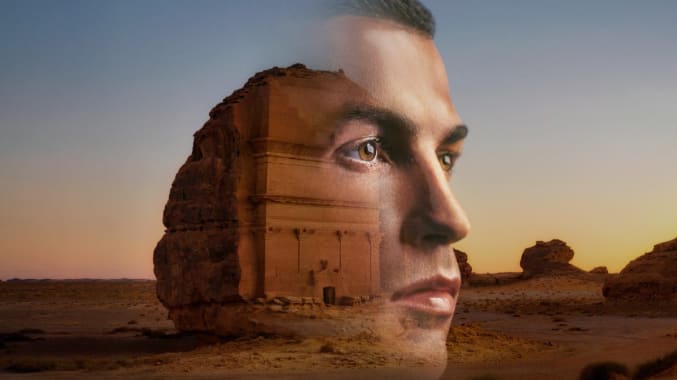
This change in travel behaviour is reflected in the Saudi Tourism Authority’s global campaign, I Came for Football, I Stayed For More. Fronted by Cristiano Ronaldo, who now lives in Riyadh, the initiative draws attention to Saudi Arabia’s Unreal Calendar, a year-round programme of experiences across culture, sport, heritage and leisure. Rather than focusing on individual landmarks, the campaign presents Saudi through everyday moments and repeat experiences, positioning the country as a place to stay longer and return to.
Seen through this lens, winter stands out as the season when Saudi Arabia feels most accessible. The destinations highlighted as part of the campaign illustrate how the country’s urban centres, heritage locations and natural landscapes are best experienced during the cooler months.
Riyadh: Urban growth meets cultural repositioning
In winter, Riyadh becomes a city designed for being present rather than passing through. Areas such as the King Abdullah Financial District reveal themselves through walkable streets, architectural detail and public spaces meant for extended use. Established landmarks like Kingdom Tower continue to define the skyline, while Boulevard City brings together sport, entertainment and large public gatherings, reinforcing Riyadh’s role as a regional hub for large-scale events.
Beyond the modern city lies Diriyah, set along Wadi Hanifah. As the birthplace of the Saudi state, the UNESCO-listed At-Turaif District offers insight into early urban planning, governance and Najdi architecture. Salwa Palace remains central to the site, while Al-Bujairi Heritage Park and Diriyah Terrace link historical spaces with contemporary cultural life.
Jeddah: Heritage and the Red Sea
Jeddah’s winter identity is closely tied to its coastal setting and historic core. The Al Balad district is at its most inviting during the cooler months, when its restored buildings, markets and narrow streets can be explored at ease. The area reflects centuries of trade, migration and cultural exchange that continue to shape the city’s character.
Along the coast, the Jeddah Corniche becomes an extension of daily life, shaped by open walkways and sea views. The Jeddah Yacht Club and Marina represents the city’s contemporary face, while Bayad Island offers a quieter experience of the Red Sea.
The Saudi Red Sea: Low-density coastal travel
Stretching across nearly 90 islands, the coastline combines beaches, dormant volcanic formations and desert dunes. The experience here is shaped less by individual attractions and more by scale, space and openness.
Locations such as Shura Island and Shebara Island reflect the region’s island character, where light, water and distance influence the pace of travel. Desert Rock demonstrates how contemporary architecture can exist alongside the natural terrain rather than overpower it. Cooler temperatures support water-based activities and curated cultural experiences, reinforcing a model of coastal tourism built around immersion rather than intensity.
AlUla: History, landscape and cultural programming
Located in the north-west desert, the region’s history is embedded in its landscape. Hegra, Saudi Arabia’s first UNESCO World Heritage Site, preserves ancient rock-cut tombs that point to civilisations dating back thousands of years. Nearby, Elephant Rock stands as a natural formation shaped over time.
The AlUla Oasis offers contrast, showing how communities have sustained life in the desert across generations. Cultural landmarks such as Maraya introduce contemporary art and performance while reflecting the surrounding cliffs and sky.
Through the I Came for Football, I Stayed For More campaign and Ronaldo’s association with Saudi Tourism, winter is being positioned as the season when the country’s destinations feel most tangible.